

My theme of the year is FLOW STATE.
Which, depending on your tolerance for astrology, Human Design and conversations involving the phrase “the universe is giving me feedback”, may require some explaining.
Apparently, Taureans have just emerged from a particularly sticky seven-year astrological chapter. I won’t pretend to understand the planetary mechanics of it all, but the basic premise is that us Taureans have been going through a period of fairly significant upheaval, change and disruption.
Whether you believe in astrology or not, I can tell you this much: it tracks.
The last seven years of my life have contained an extraordinary amount of change. Not necessarily bad change. Some of it has been wonderful. But there has been a feeling, at times, of pushing shit up a hill.
There have been roadblocks, challenges, endings and deaths. Some literal, some metaphysical. Many yeses that should have been noes. Overextending myself in directions that weren’t necessarily giving anything back. Trying to make certain things work because I’d decided they should work. A general sense that I was expending enormous amounts of energy without always feeling like that energy was moving me forward.
Then, earlier this year, something shifted.
Again, perhaps the planets moved. Perhaps I moved. Perhaps I’ve simply done enough work on myself over the past seven years to finally recognise what I want.
Probably a combination of the latter two, if we’re being sensible.
But I could feel it.
Things started moving again.
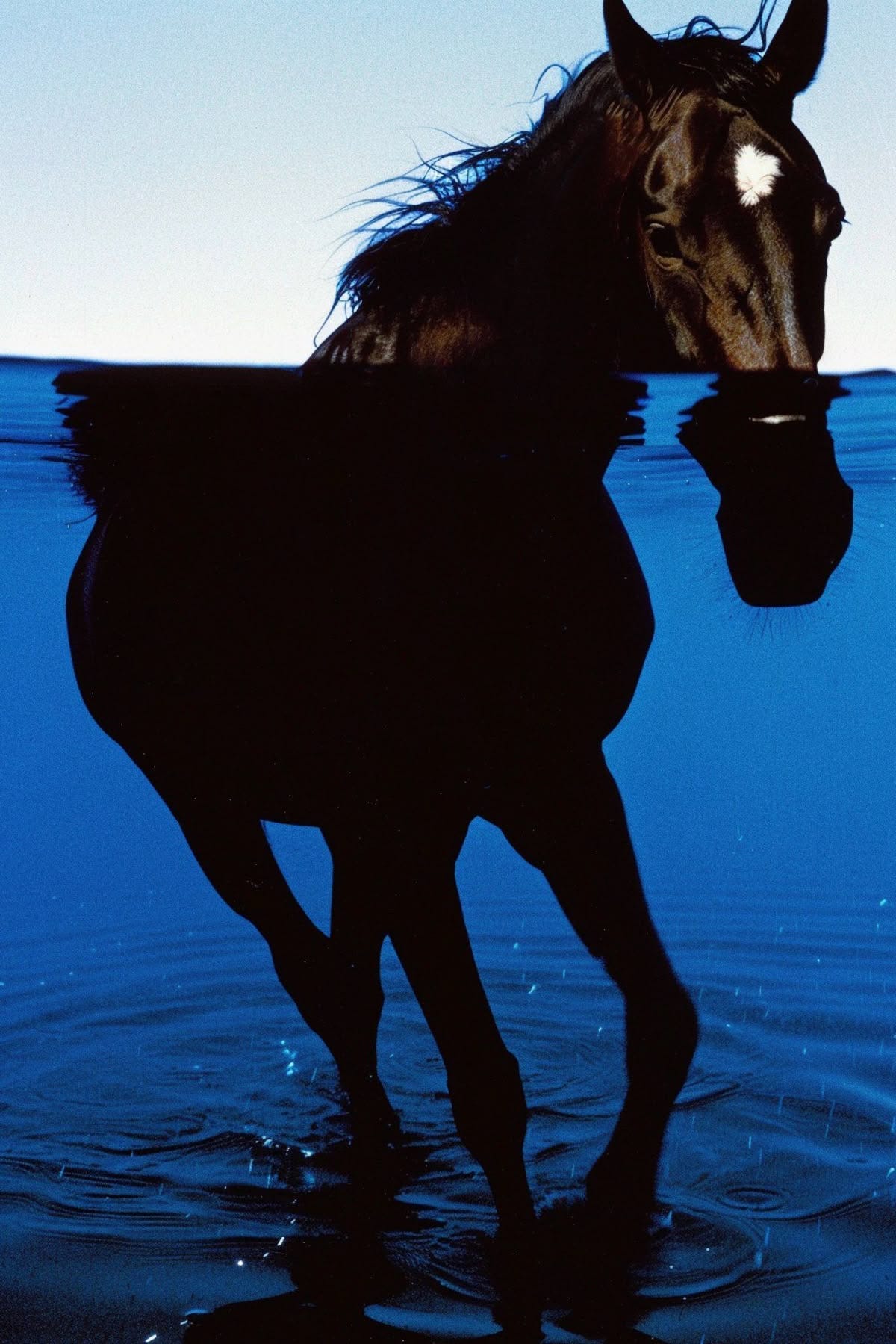
Fittingly, 2026 is also the Year of the Horse: movement, freedom, energy, forward momentum. If the universe is laying the metaphor on that thick, I’m happy to take it.
And when I thought about what I wanted the year ahead to feel like, the theme that kept returning was flow state.
Not ease, exactly.
I’m not particularly interested in an easy life. I love challenge. I like having slightly too much on my plate. I like looking at something that feels enormous and wondering whether I’m capable of pulling it off.
I didn’t want less challenge or ambition.
I wanted less friction.
I wanted that feeling of steady water: energy, optimism, connectedness, momentum. Presence, but not in a still or idle way. Presence in motion. Being completely connected to where I’m going without feeling like I’m dragging myself there.
Focused, but not forcing.
That’s what flow state means to me.

I’ve been reading Optimal by Daniel Goleman and Cary Cherniss, and their discussion of flow made me realise there was actually language for a lot of what I’d been feeling.
The original research into flow looked at moments when people performed at their absolute best. Different disciplines, same internal experience. The researchers identified a handful of recurring conditions: the challenge and the person’s skills were well matched, self-consciousness disappeared, their perception of time changed, the experience felt good and, perhaps most interestingly, something incredibly difficult could feel almost effortless.
I know that feeling intimately.
When I’m deeply immersed in something creative, ‘Tess’ disappears from the equation entirely.
I’m not wondering whether I’m doing a good job. I’m not particularly aware of myself at all. Ideas seem to arrive faster than I can execute them. There is this strange combination of calm and speed - an energised clarity - where I know what to do next without having to labour over the decision.
Time becomes completely elastic.
Most days when I’m working on Land Lab, I’ll eventually look at the clock and think, shit, it’s 3pm, before racing out the door for school pick-up.
Hours have passed, but they haven’t really felt like hours.
I’ve always imagined creativity in those moments as an energetic channel. Something coming through the top of my head and moving through me. I’m obviously doing the work, but there is very little sensation of pushing.
It spills.
And reading Optimal made me wonder about something.
If we know what flow feels like, why do we treat it as a happy accident?
What if, instead of waiting for those moments to appear, we became much more deliberate about creating the conditions that allow them to happen?
-
Human Design has given me another lens for understanding this. Specifically, this book by Jenna Zoe.
I’m a Generator, which essentially means I have an enormous capacity for sustained energy when that energy is directed towards things I genuinely want to be doing.
The very simplified version is: if it’s not a fuck yes, it’s a fuck no.
Again, you don’t have to believe in Human Design for this to be useful. What interested me when I discovered it was that it gave language to something I’d already experienced repeatedly in myself.
I have a lot of energy.
The problem has never really been how to conserve it.
It’s where I point it.
Give me something I care deeply about and I can work on it obsessively. I’ll think about it in the shower. At the gym. Driving the car. I’ll work for hours without noticing I’m working. The energy seems to regenerate through the doing.
Point that same energy towards something that feels fundamentally wrong for me and it behaves completely differently.
Everything feels heavier.
I procrastinate. I become distracted. Small tasks feel disproportionately difficult. I can still force myself through them - I have, many times - but the energy feels like it’s leaking rather than multiplying.
This has changed the way I think about protecting my energy.
Maybe protecting your energy isn’t about conserving it. Maybe it’s about directing it toward something genuinely meaningful to you.
-
This year, I’ve become quite ruthless about that direction.
I’ve been joking that I’m creating my own mini utopia.
Not in a private-island-and-never-answer-an-email-again kind of way. More that I’ve deliberately created enough space in my life to ask a question I hadn’t been able to ask properly for a long time:
What do I actually want to fill this with?
Selling Smack Bang created an enormous amount of space.
Selling our house created another kind.
Both were significant endings, but they’ve given me something incredibly valuable in return: freedom to make empowered choices about what comes next.
And I’ve resisted the instinct to immediately fill every available gap.
I’ve said no to jobs. No to consulting work that I could absolutely do but don’t particularly want to. No to little obligations that individually seem harmless but collectively start eating away at the edges of your life.
I’ve become much more interested in the fuck yes.
Not because I expect every day to be filled exclusively with things I adore. I still have emails and accounting and school admin and all the deeply unsexy infrastructure required to be a functioning entrepreneur.
I outsource a lot.
I batch a lot.
I try to do the hard thing first.
But I’m becoming far more protective of the large blocks of energy underneath all of that. Because I’ve realised I don’t need another opportunity simply because there is space for one.
Sometimes you don’t need another opportunity. You need enough empty space to recognise the right one.
-
I’ve also started paying much closer attention to the physical conditions in which I work best.
Autonomy is enormous for me.
So is uninterrupted time.
Creativity.
A beautiful environment.
The ability to move at my own pace.
Human Design apparently describes my ideal environment as a “cave”, which is both ridiculous and extremely accurate. Give me an enclosed room, by myself, with nobody moving around me or asking me questions, and I’m very happy.
This is one of the biggest differences I’ve noticed between running Smack Bang and building Land Lab.
At Smack Bang, my time was inherently connected to other people’s time. Clients were waiting. My team needed decisions. Meetings were booked. Deadlines were immovable. Even when I loved the work, there was an external rhythm I had to operate within.
At Land Lab, my days are much more self-directed.
I can sit down in the morning and ask: What’s the most important problem to solve today? What am I most energised by? Where can I create the most traction?
Then I go there.
Some days that’s brand. Some days it’s product. Some days it’s growth or practitioners or some obscure business problem I suddenly become determined to solve.
I’m still working towards very clear objectives.
I’m just giving myself more freedom over the route.
That distinction has been enormous for me.
Even my mornings have become part of it. I have ADHD, and my brain can be a noisy place to live. This year I’ve committed to going to the gym every morning, partly because I’ve realised how dramatically it changes the state I bring to my desk.
The noise settles.
My mind feels more spacious.
I can operate with clarity.
None of these things guarantee flow. But together, they create much better conditions for it.
What I know to be true is that flow isn’t the absence of structure. Sometimes structure is what makes flow possible.
-
There’s another part of this philosophy that is probably slightly harder to explain without sounding like I’ve started tarot cards (I have, by the way).
I think flow is information.
I often describe myself as being in conversation with the universe.
Something opens.
Interesting.
A person appears at exactly the right moment. A decision becomes unexpectedly easy. Something moves faster than anticipated. One thing leads naturally to another and you can feel momentum building underneath you.
Green light.
Then there are the other experiences.
The door closes. Then another one. The person disappears. The timeline blows out. The thing you keep trying to make happen somehow becomes more complicated every time you touch it.
I’ve had both.
Years ago, we were renovating our first house in Coledale, and the entire process felt like friction. Everything took longer than it should. Mistakes happened. Routes closed. Problems seemed to create more problems. We kept pushing and pushing and pushing.
We ended up giving up half way through.
We pivoted and brought a block of land in Lennox Head. And the experience was almost comically different.
Building a house was still hard. There were still thousands of decisions and an enormous amount of work involved.
But it moved with ease.
The right people appeared. Decisions felt easy. Timelines shortened rather than stretched. Things seemed to resolve themselves instead of multiplying.
It felt like one enormous green light.
You could explain that as luck. Better planning. Different people. Timing. The universe. All of the above.
I’m less interested in proving why than I am in noticing the difference.
Because I’ve stopped assuming every obstacle is something I’m supposed to overcome.
Sometimes an obstacle is information.
That doesn’t mean the second something becomes difficult I abandon it and declare the universe has spoken.
In fact, all of the best things I’ve done in my life have been incredibly hard.
Challenge and friction aren’t the same thing.
Challenge stretches you. It asks more of you. Sometimes it scares the shit out of you. But somewhere underneath the difficulty there is still movement. Energy. A sense that the work is asking you to become bigger.
Friction feels different.
Friction is repeatedly pouring energy into something that refuses to move and never stopping long enough to ask whether the direction itself might be the problem.
I’m trying to get better at knowing the difference.

I think this is where my relationship with ambition has changed most.
For a long time, I assumed success required some degree of constant grind.
Push harder. Do more. Take the meeting. Accept the opportunity. Figure it out. Keep going.
And there is obviously enormous value in persistence. I don’t suddenly believe we should all abandon discipline and spend our lives waiting for inspiration to strike.
But I no longer think the highest-performing version of me is necessarily the one exerting the most effort.
Increasingly, I think success is about intentionality.
Making smart, tactical decisions about where your energy is going and why.
What deserves your effort?
Where does your attention create the greatest return?
Which hard thing is worth doing?
Which apparently impressive opportunity is actually going to take you further away from yourself?
Where are you pushing because the challenge is meaningful, and where are you pushing because you haven’t stopped to question the direction?
Those questions feel much more useful to me now than simply asking how much more I can fit in.
I haven’t become less ambitious.
If anything, I think I’m more ambitious than I’ve ever been.
I’m just less willing to waste ambition.

I totally feel this notion of Flow!
Just want to read to book now :)
Tess, I freaking love you! First of all, as a fellow Taurean I feel like I’m coming out of this shell I’ve been living in for the past 7 years and it feels so damn good. Secondly, adding those books to my reading list. Thirdly - you are one of the most creative and successful people I know I’m so excited I get to devour all of your inner thoughts.