


People don’t buy a backpack because they’re particularly passionate about carrying things on their shoulders. They buy it because they want to disappear into the wilderness for a weekend with their friends.
They don’t buy an expensive wine glass because they’re fascinated by the structural integrity of stemware. They buy it for the dinner parties, the conversations that run late into the night, the pleasure of making an ordinary Wednesday eve feel like an occasion.
And they certainly don’t buy a Porsche because they need a convenient way to get to Woolworths.
We like to think we’re rational consumers, carefully evaluating products on their merits. But so much of what we buy is an expression of how we want to feel, who we believe ourselves to be, and the lives we imagine living.
The best brands understand this. They recognise that the product is only one part of the proposition. The real opportunity lies in everything the product represents.
Which brings me to Sleep or Die.
On paper, it’s a brand selling sleep supplements. A functional product in a category largely concerned with helping people get some rest.
But look a little closer and you’ll find something far more interesting.
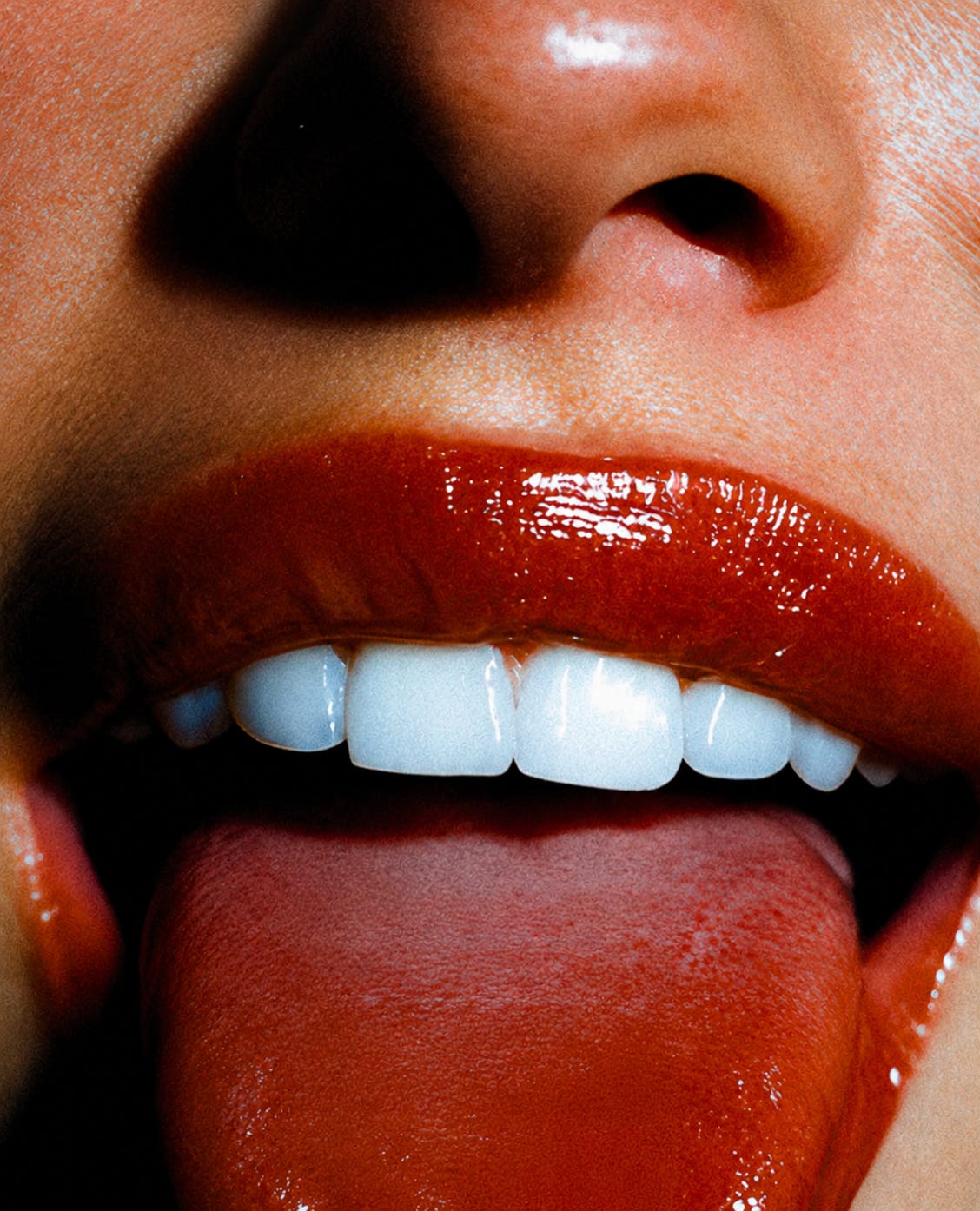
Sleep or Die has borrowed the visual language of nightlife, the attitude of fashion and the irreverence of counterculture to make going to bed feel like an act of rebellion.
What Sleep or Die understands, and what so many businesses still struggle to articulate, is that people buy the product, but they fall in love with the world around it.
I’ve been watching Sleep or Die with enormous interest because I think it’s one of the most compelling examples of contemporary brand-building I’ve seen in a while. The branding is irreverent, culturally literate and wonderfully committed to its own absurdity. But beneath the humour and provocation, there’s something much more sophisticated happening.
Sleep or Die understands a principle that I think a lot of brands have forgotten.
Being desirable and being useful are two entirely different jobs. And a great brand knows how to do both.
The category is the creative opportunity
Sleep is a fascinating category because the conventional visual and verbal territory is so well established.
Think about how most sleep products present themselves. Soft blues and muted neutrals. Serene bedrooms. Ethereal imagery. Gentle promises of rest, restoration and relaxation. Everything is carefully designed to lower your heart rate before you’ve even opened the packaging.
There’s nothing inherently wrong with any of that. Those associations exist because they make intuitive sense. But when an entire category draws from the same creative vocabulary, familiarity starts working against memorability.
And that’s where the opportunity lies.
Sleep or Die takes the underlying proposition — sleep is essential to your wellbeing — and delivers it through a completely different cultural lens.
The name alone is a wonderful piece of positioning. It’s confrontational, memorable and almost comically dramatic. Yet underneath the provocation sits a surprisingly straightforward truth: sleep is a biological necessity, and insufficient sleep has real consequences.
The brand has taken a serious functional benefit and given it an outrageous personality.
What I particularly admire is that the provocation has a purpose. It creates a tension between the thing being sold and the way it’s being sold, which makes the whole proposition more interesting. I’ve always believed that some of the richest creative opportunities emerge when you look at the established conventions of a category and ask which ones are genuinely necessary.
The answer is usually fewer than you think.
And the courage to challenge those conventions is often where a brand finds its edge.
Culture is a language. Some brands speak it more fluently than others.
Here’s where Sleep or Die gets really interesting to me.
Its visual identity and product universe borrow from places you wouldn’t ordinarily associate with a sleep supplement: nightlife, fashion, smoking accessories, underground clubs and a certain kind of rebellious, after-dark energy.
The chrome case is a particularly clever expression of this. It takes an object associated with cigarettes and repurposes its cultural meaning for sleep strips.
I love the inversion.
An accessory that evokes staying out late is now associated with getting a good night’s sleep. Something once coded as a vice becomes part of a wellness ritual. It’s witty, but there’s also a strategic intelligence to it.
Objects carry cultural meaning long before a brand puts its logo on them. The shape of a cigarette case, the visual language of a nightclub, the attitude of a fashion campaign; these things arrive with associations already attached.
Great creative direction understands those associations and knows how to manipulate them.
This is what I mean when I talk about cultural fluency.
It requires an understanding of what things signify, where those meanings come from and how they can be recombined to create something unexpected. You can’t get there simply by collecting beautiful images on Pinterest. You need to understand the references. The tension between them. The emotional response they create. The reason a particular aesthetic feels interesting at a particular moment in culture.
And, perhaps most importantly, you need the confidence to make a decision that might not appeal to everyone.
Sleep or Die isn’t trying to be universally palatable.
And that’s precisely what makes it compelling.
They’ve made wellness feel like something you might actually want to be associated with.
I think there’s a broader cultural shift happening in the wellness industry that makes Sleep or Die particularly interesting right now.
For a long time, premium wellness has been dominated by a fairly narrow aesthetic sensibility. Minimalism, purity, earnestness, ritual, restraint. A visual world that communicates health through cleanliness and composure.
It’s an aesthetic that has been extraordinarily successful. But it’s also become incredibly crowded.
And I suspect there’s a growing appetite for brands that reflect a more complicated, contradictory and human relationship with wellbeing.
People can care about their health and still enjoy nightlife. They can be disciplined about their longevity routines and have a morbid sense of humour. They can take supplements seriously without wanting their bathroom cabinet to resemble a Scandinavian wellness retreat.
We’re multidimensional creatures, after all.
Sleep or Die seems to understand that.
It makes sleep feel like part of a cultural identity rather than simply another task on the self-improvement checklist.
And I think that’s a powerful distinction. Because while a product might solve a problem, a brand has the opportunity to express something about the person choosing it.
The most desirable brands understand that people don’t make purchasing decisions solely on the basis of function. They also make them through the lens of identity, taste, aspiration and belonging.
We want products that work. But we also want products that feel like us.
And sometimes we want products that reflect the version of ourselves we’re becoming.
A brand world should have somewhere to go.
One of the clearest signs of a strong brand idea is how naturally it generates more ideas.
A weak concept often looks impressive in its initial presentation but becomes increasingly difficult to extend. Every new campaign, product or piece of communication requires another round of creative reinvention.
A strong concept behaves differently.
It establishes a set of principles, associations and possibilities that can be explored almost endlessly.
Sleep or Die has created a particularly fertile world.
There’s the language of the “strip club”, the first-time stripper kit, the sheep mascot, the chrome accessories, the matches and the broader visual vocabulary of exhaustion, nightlife and the slightly macabre.
Individually, these things are playful. Collectively, they create a recognisable universe.
And that distinction matters.
A memorable brand isn’t necessarily the one with the most memorable logo. It’s the one that has developed enough distinctive characteristics that you can recognise it across multiple expressions. The language, imagery, objects, humour and attitude begin to reinforce one another.
Over time, the brand becomes bigger than any single asset.
This is something I wish more businesses understood when they invest in brand identity. The objective should be to develop a creative system capable of producing interesting, recognisable work for years.
I want a brand idea that gives the creative team somewhere to go. One that makes the next campaign easier to imagine, rather than harder.
Sleep or Die feels like a brand with plenty of unexplored territory left inside its own concept.
And that’s an exciting place to be.
The language does more than make you laugh.
I’m particularly interested in Sleep or Die’s verbal identity because it demonstrates how powerful a distinctive tone of voice can be when it’s properly integrated into the brand.
Calling a sleep strip customer a “stripper” is objectively ridiculous. But within the logic of this brand, it makes perfect sense.
The language creates a sense of membership. It gives the audience a shared vocabulary and turns otherwise ordinary interactions into expressions of personality.
There’s something almost tribal about that.
When a brand develops its own language, it gives people a way to participate in its world. And participation is a much more interesting ambition than recognition alone.
Of course, there’s a fine line between a distinctive verbal identity and a brand that’s so entertained by its own cleverness that it forgets to communicate anything useful.
I’ve seen plenty of brands fall into that trap.
The best brand voices understand that personality should support communication, not obstruct it.
Sleep or Die’s irreverence works because the underlying proposition remains easy to understand. The products, formats and purchasing options are still presented as things a customer can evaluate. It’s kind of like a 2026 version of Frank Body.
The jokes create attention and character. The functional information gives people a reason to consider buying.
That’s an important distinction, particularly in a category involving health-related products.
Creative brilliance doesn’t remove the responsibility to communicate clearly or substantiate what you’re selling.
If anything, the more provocative your brand, the more important it becomes that the product experience earns the attention you’ve created.
The most valuable thing a brand can create is a reason to talk about it.
There’s an enormous amount of money spent trying to make brands visible. Paid advertising, influencer partnerships, content production, performance marketing, endless attempts to interrupt someone else’s attention.
And while all of those things can play an important commercial role, I think we sometimes overlook the extraordinary value of making something inherently interesting.
Something that people want to show their friends.
A product that prompts someone to say, “Have you seen this?”
Or a brand world compelling enough for a brand nerd in little, old Lennox Head to dedicate an entire Substack to dissecting it.
Sleep or Die has several characteristics that make it naturally conversational. The name, the packaging, the unexpected accessories, the humour and the sheer commitment to its own personality.
I can imagine someone discovering the brand and sharing it purely because they appreciate the creative execution. They might not even be in the market for sleep supplements.
But they’ve encountered something interesting enough to pass along.
That’s social currency.
And while I wouldn’t confuse the potential to generate conversation with evidence of commercial success, I think there’s an important lesson here for anyone building a brand.
If every encounter with your business depends on paying to put it in front of someone, you’re making the job of growth considerably harder.
A compelling brand gives people reasons to notice, remember and talk about it independently of your media budget.
That kind of magnetism is difficult to manufacture. But it can absolutely be designed for.
The age of competent branding is over.
Or at least, I think competence is becoming a much less interesting competitive advantage.
We now live in a world where beautiful design is increasingly accessible. And that’s a wonderful thing in many respects. But it also means that the ability to produce something aesthetically pleasing is becoming less rare.
The internet is filling up with brands that look like brands: They’re attractive, articulate and technically accomplished. They have all the right ingredients, assembled in all the right places.
And somehow, very little to say.
I think the next era of great brand-building will place an even greater premium on qualities that are much harder to automate: taste, cultural understanding, original thinking, conviction and the ability to make unexpected connections.
The creative intelligence required to understand why a cigarette case might be an interesting reference for a sleep supplement.
The confidence to build an entire verbal identity around an absurd double entendre. The discernment to know when an idea is genuinely distinctive and when it’s simply being provocative for attention.
And the commitment to carry a creative point of view through every expression of a business.
These are the things that turn competent branding into something people actually care about.
Sleep or Die is a compelling example because its identity feels like the result of a series of deliberate, opinionated decisions.
Someone has decided what this brand believes, how it behaves, what cultural world it belongs to and which conventions it’s willing to ignore.
And then they’ve committed.
Which I find rarer than it should be.
The courage to have a point of view
I should make one distinction here.
I’m admiring Sleep or Die as an exercise in brand strategy, identity and cultural positioning. I can’t speak to the efficacy of its products, its financial performance or whether the initial attention will translate into long-term commercial success.
Those things matter, and a brilliant brand can only carry a disappointing product so far.
But as a creative proposition, I think it offers a genuinely useful lesson.
The strongest brands have an opinion about the world.
They understand the cultural context in which they exist. They know which conventions to embrace and which to challenge. They create distinctive associations, develop their own language and give people something to identify with.
And they accept that having a strong point of view means some people won’t like it.
I’ve spent much of my career encouraging businesses to find the edge in their positioning and have the courage to pursue it. Because when you try to make something that appeals to everyone, you often end up creating something that nobody feels particularly strongly about.
Sleep or Die has no such problem.
It’s a sleep brand that has managed to make the act of going to bed feel rebellious, fashionable and faintly ridiculous.
And in a category that has spent years telling us to relax, I find that rather refreshing.
The best brands have a pulse. You can feel when someone has put an actual point of view behind them.
And right now, Sleep or Die has one hell of a heartbeat.