


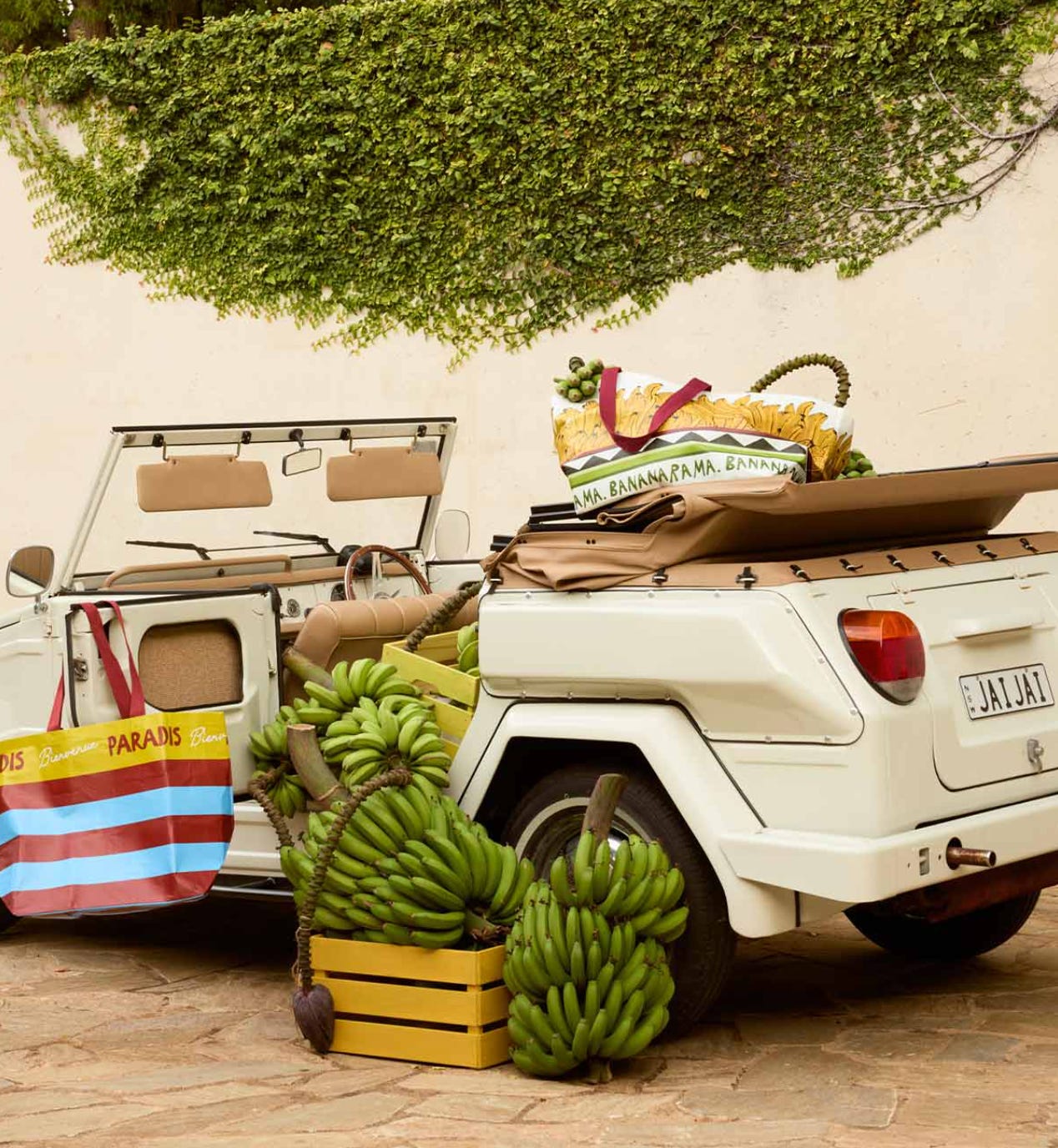
Somewhere in the Northern Rivers, a very good party happened recently. And I’ve been thinking about it ever since.
It was the launch of Tropicali, a collaboration between Australian fashion label The Wolf Gang and interiors institution Fenton & Fenton. Two brands with an almost suspiciously compatible affection for colour, print, personality and the kind of objects that make sensible people behave a little irrationally.

The collection itself is delicious. Banana-print tablecloths, wonderfully eccentric ceramics, resortwear that looks like a holiday you haven’t booked yet. The sort of things that make you reconsider your entire aesthetic identity and possibly the contents of your bank account.
But it wasn’t the products that initially stopped me scrolling.
It was the party.
Specifically, the art direction of the party.
And whoever was responsible deserves a very large round of applause.
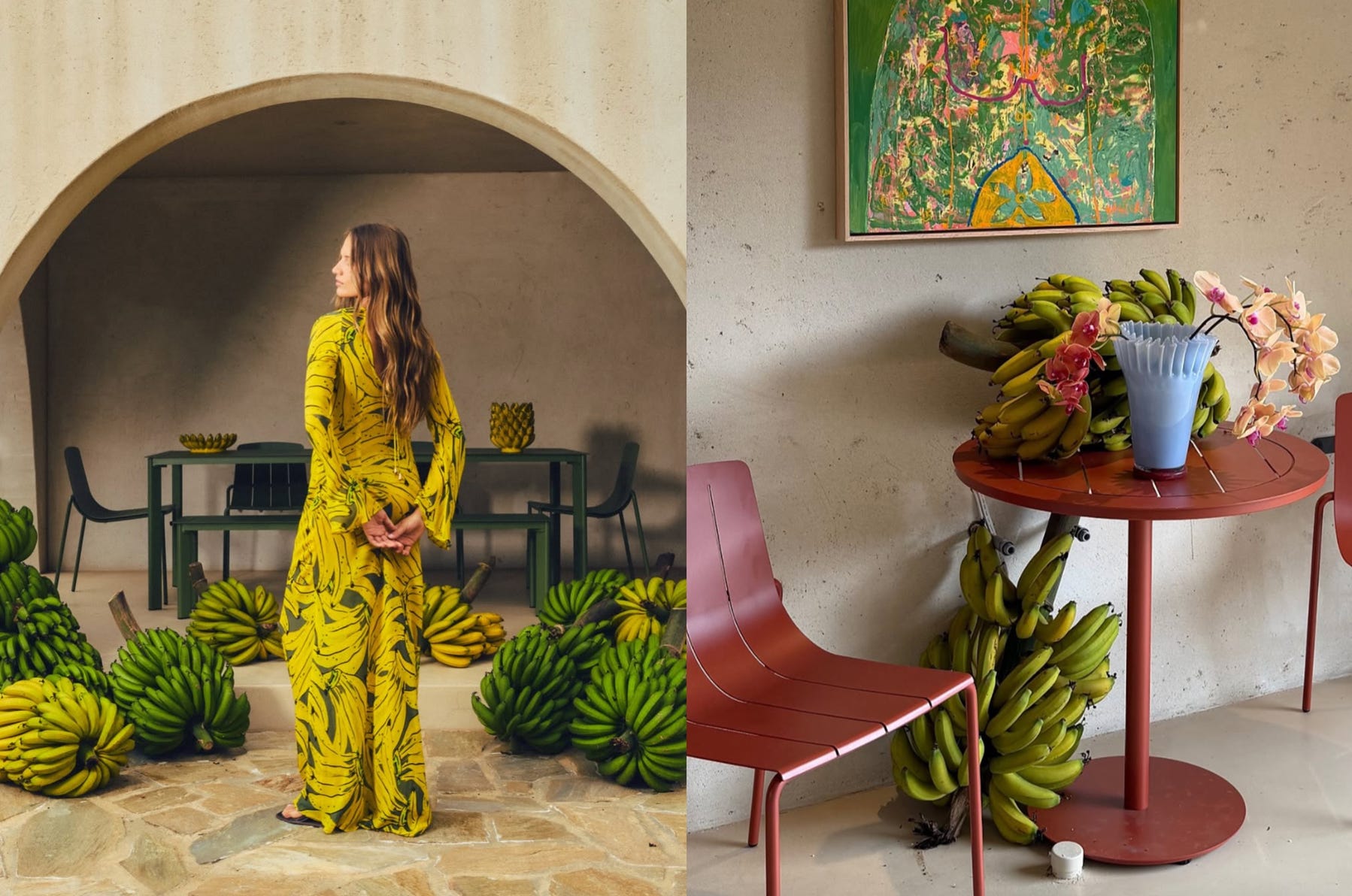
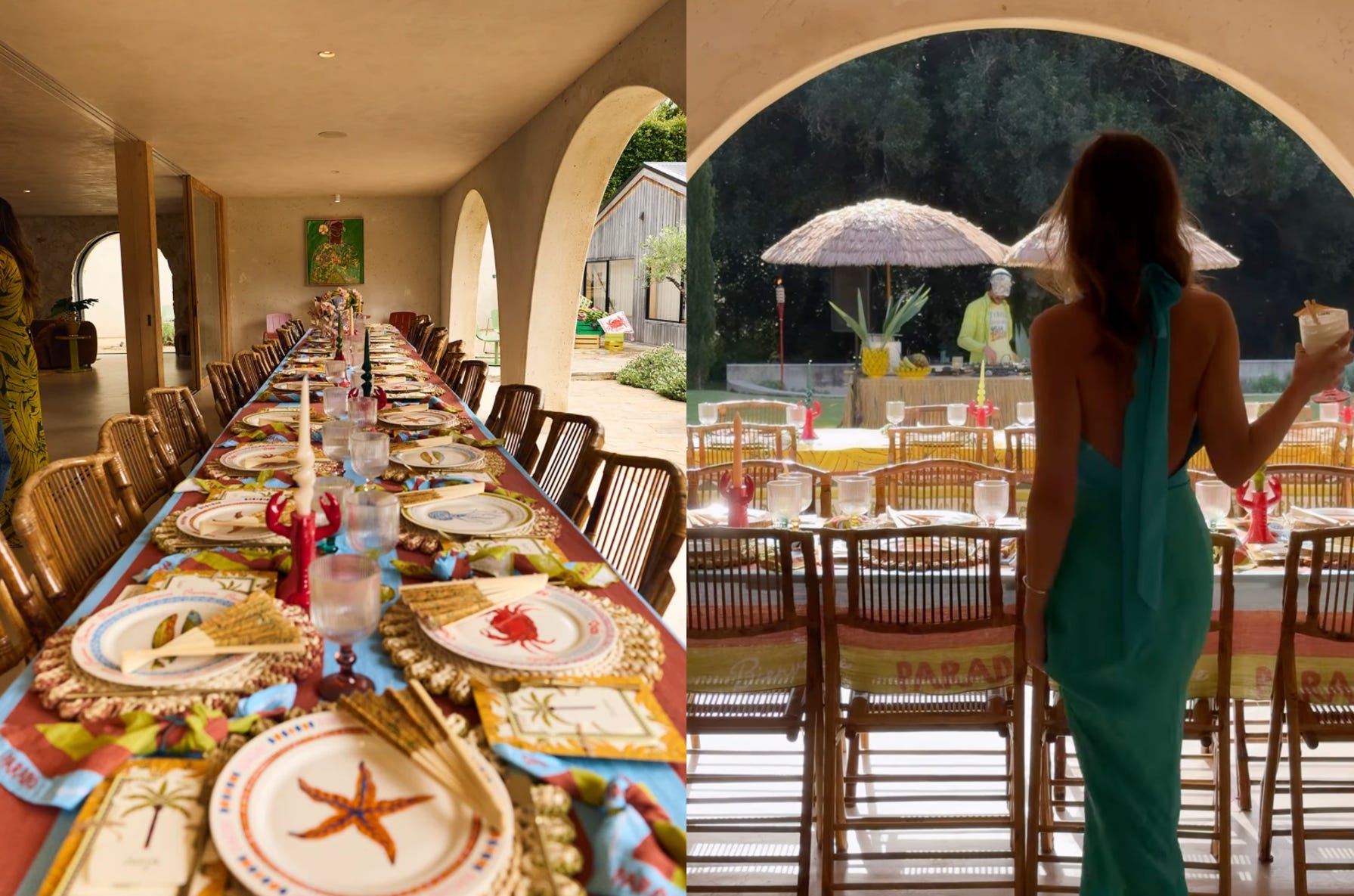
First, can we talk about the art direction?
The launch took place at Jai Bohème, the wonderfully characterful Newrybar home of artist Jai Vasicek. Which, frankly, feels like the sort of location a creative director dreams about discovering and then spends the rest of their career trying to find again.
There were long, exuberantly dressed tables, tropical cocktails, artwork, extraordinary prints and guests wearing pieces from The Wolf Gang’s limited-edition capsule. Maria’s Byron Bay provided the (very on-brand) feast, Departed Spirits joined the celebrations, and live music carried the afternoon towards sundown.
Every element appeared to belong to the same gloriously eccentric universe. Of the tropical variety.
What I love most about the art direction is its commitment. There’s no nervous attempt to temper the collection’s personality with a tasteful neutral backdrop. The prints are bold, the setting is expressive, and the entire experience embraces the visual excess that makes both brands interesting in the first place.
And yet, somehow, it doesn’t feel chaotic.
That’s the clever part.
There’s an enormous difference between putting lots of beautiful things together and creating an environment where everything feels like it belongs. The latter requires an instinct for composition, proportion, visual rhythm and, perhaps most importantly, knowing which rules are worth ignoring.
I haven’t been able to establish whether the event was art-directed in-house or by an external creative team. Either way, I’d love to know who was behind it.
Because this is what happens when an event is approached as a creative expression rather than simply a marketing obligation.
The launch didn’t just showcase the collection. It made the collection’s world inhabitable.
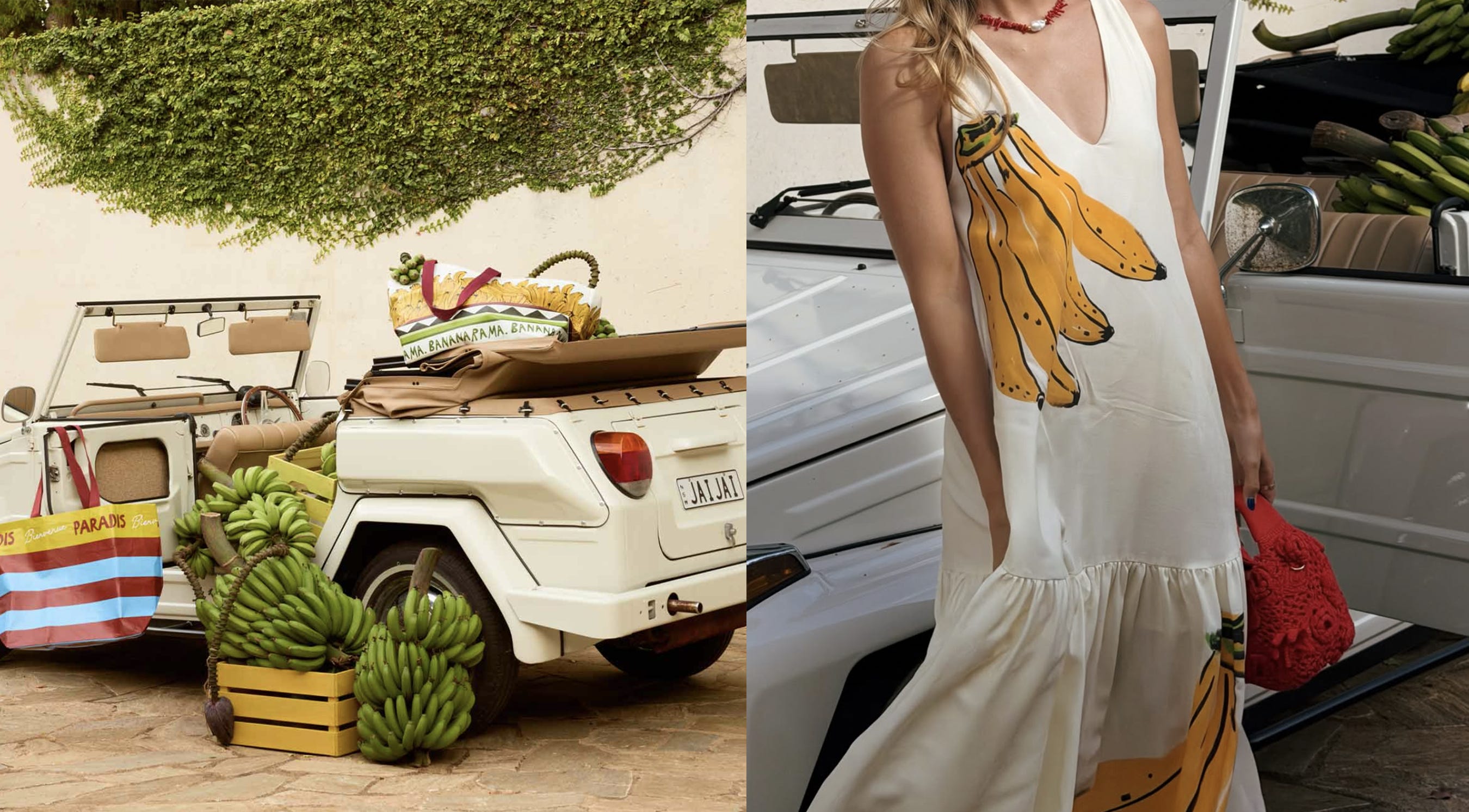
A collaboration that passes the chemistry test
Brand collaborations are everywhere. And while I love the idea of two creative businesses joining forces, I find a lot of the results rather underwhelming.
Sometimes it feels as though the entire strategic rationale was that both brands had a decent Instagram following and somebody knew somebody in marketing.
The result is often a perfectly adequate product with two logos on it.
Tropicali is interesting because the connection feels much more intrinsic and intimate.
The Wolf Gang has spent a decade building a recognisable fashion universe around expressive prints, colour and a sense of escapism. Fenton & Fenton has an equally confident point of view in interiors, championing eclecticism, art and the pleasure of surrounding yourself with things that have personality.
They’re operating in different categories, but they speak a remarkably similar creative language.
And that’s the sweet spot.
The most compelling collaborations aren’t necessarily between two brands that look alike. They’re between two brands that see the world in compatible ways.
Fashion and interiors are particularly fertile territory for this. Both are expressions of identity. Both are deeply emotional categories. Both offer people a way of communicating taste without having to explain it.
A print that feels fantastic on a sarong can feel equally fantastic on a tablecloth. A colour palette that belongs in a summer wardrobe might also belong in your dining room.
The collaboration gives that shared sensibility somewhere new to go.
Rather than one brand borrowing the other’s credibility, each extends the other’s creative possibilities.
The best collaborations create something that feels both unexpected and inevitable.
The cleverness of crossing categories
I think there’s a broader lesson here about how brands grow.
When a business wants to expand, the instinct is often to look for the next logical product within its existing category. A fashion label introduces another accessory. A homewares brand develops another decorative object.
Perfectly sensible.
But some of the most interesting opportunities exist just outside the boundaries of what a brand currently sells.
The question becomes less What else could we make? and more Where else could our point of view belong?
That’s a much more expansive way to think about growth.
For The Wolf Gang, Tropicali allows its aesthetic to move beyond the body and into the home. For Fenton & Fenton, the collaboration brings its approach to colour and collecting into the world of fashion.
The result is a shared lifestyle proposition that feels entirely credible for both businesses.
And importantly, it creates new reasons for people to discover each brand.
Someone who has never considered buying from The Wolf Gang might fall in love with a banana-print tablecloth. Someone who knows Fenton & Fenton for its interiors might discover a vase they can’t stop thinking about.
That’s commercially interesting, of course. But it’s also creatively interesting.
Because the collaboration doesn’t feel engineered around audience acquisition, even though introducing each brand to the other’s customers is an obvious potential benefit.
It feels engineered around an idea.
And the commercial logic follows suit.
Why the event was the smartest part
Here’s where I think Tropicali becomes a particularly good example of contemporary brand building.
The brands could have photographed the collection beautifully, launched it online and sent a few products to influencers.
Instead, they created an occasion.
A place where the collection could be worn, used, experienced, photographed and remembered.
The tables weren’t simply styled with products. They demonstrated how those products could become part of a life. The guests weren’t merely attendees. Dressed in the collection, they became part of its visual language. The artwork and location added another layer of character that a studio campaign would have struggled to replicate.
The entire afternoon made a case for the collection without needing to explain why anybody should buy it. It made the thing come alive.
And that’s a much more interesting form of persuasion.
I’ve always believed that the strongest brands are able to communicate something beyond the functional value of what they sell.
A good brand makes you want the product.
A great brand makes you want a little piece of the world the product belongs to.
Tropicali understands that distinction beautifully.
The art of making people want in
I think we’re going to see increasingly interesting brand collaborations over the next few years, particularly as businesses look for ways to cut through an environment saturated with content.
But I hope the lesson people take from Tropicali isn’t simply that collaborations are a good marketing tactic.
Or that everyone should throw a beautifully styled lunch.
The real lesson is about creative compatibility.
When two brands have a strong enough identity, they can recognise something of themselves in another business without losing what makes them distinctive.
They can build on a shared idea, introduce new perspectives and create something with more character than either might have produced independently.
And when that thinking extends from the products into the campaign, the setting, the people and the experience, the result becomes far more interesting than a conventional launch.
It becomes a real moment.
Tropicali is a reminder that commercial creativity doesn’t always require inventing something entirely new.
Sometimes it requires recognising a connection that was hiding in plain sight.
And having the confidence to follow it all the way through.
As for me, I arrived for the art direction and stayed for the banana tee.
Which I suspect is exactly how it’s supposed to work.
The EC Edit: My Tropicali Wishlist
An entirely unnecessary number of things in my cart rn.
01. Bananarama Sarong
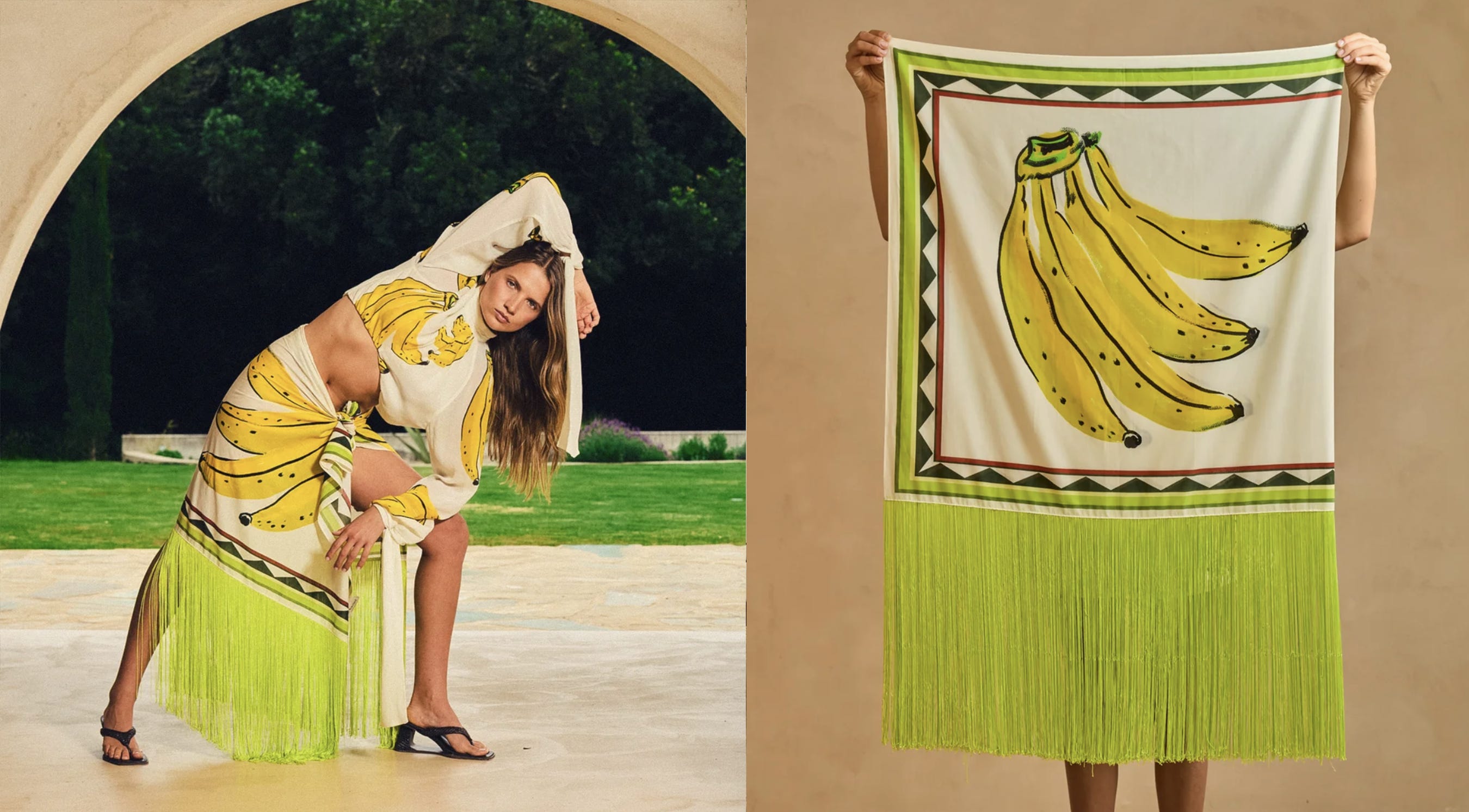
The sort of sarong that could convince me I’m on holiday even when I’m technically just going to the beach for an hour. I’m very susceptible to a good print, particularly one that doesn’t take itself too seriously.
02. Bananarama T-Shirt
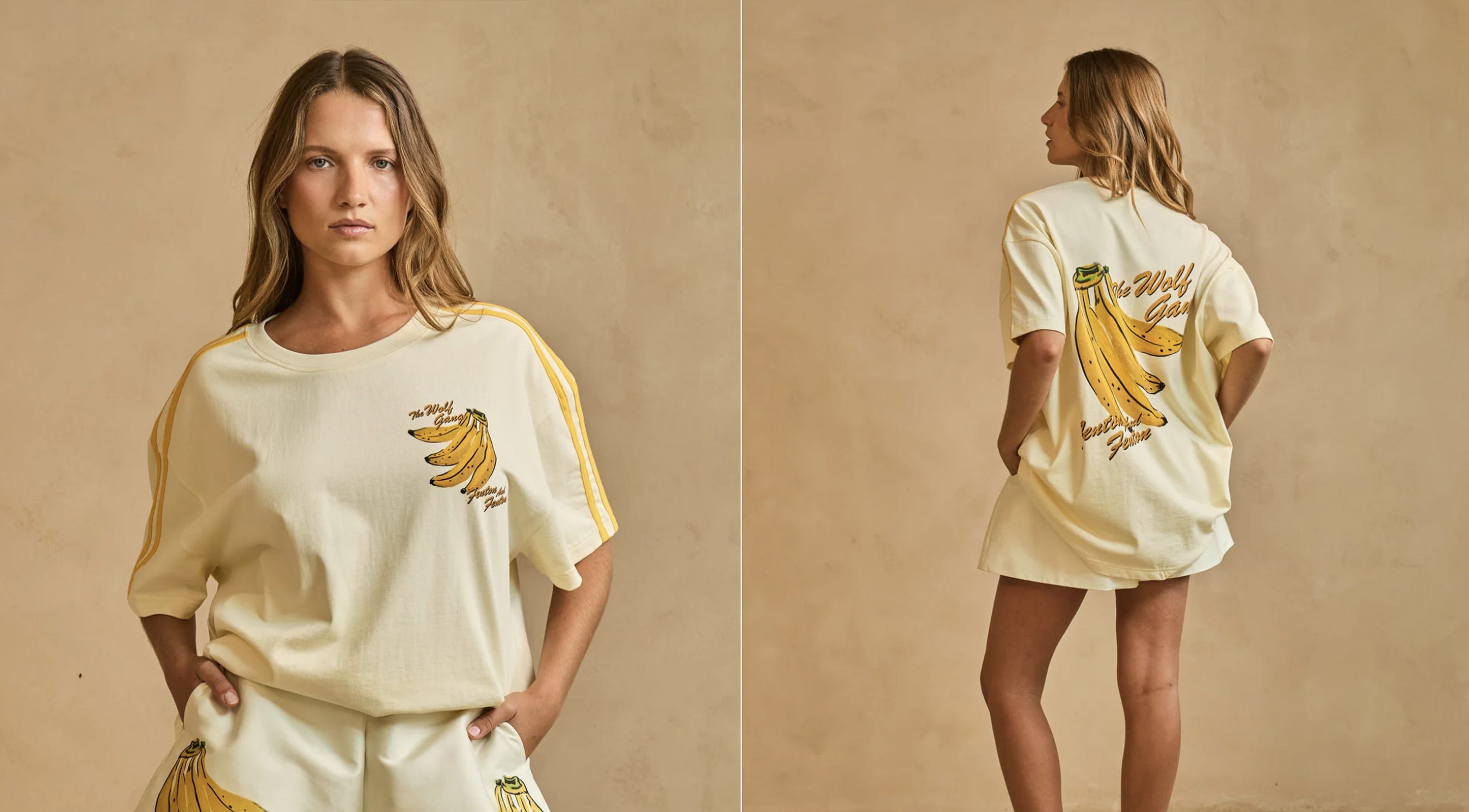
A novelty tee with enough personality to become a wardrobe favourite. I’d wear this with mini crochet skirt and the conviction of someone who has made a very sensible purchase.
03. Wanda Fish Vase in Rose
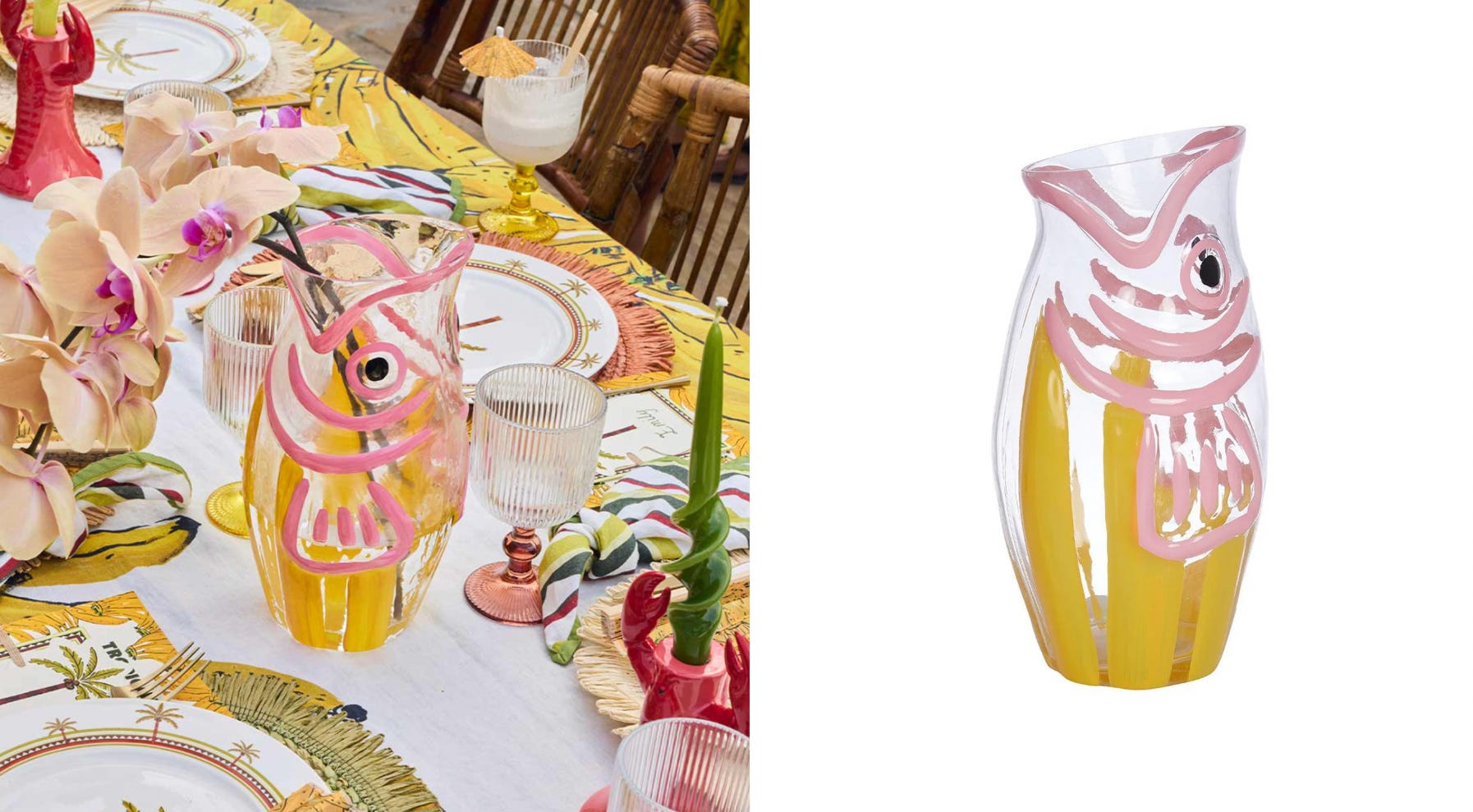
A fish-shaped vase is precisely the kind of object I absolutely don’t need and will think about for an unreasonable amount of time. Equal parts sculpture, humour and excellent shelf company.
04. Balmy Placemats
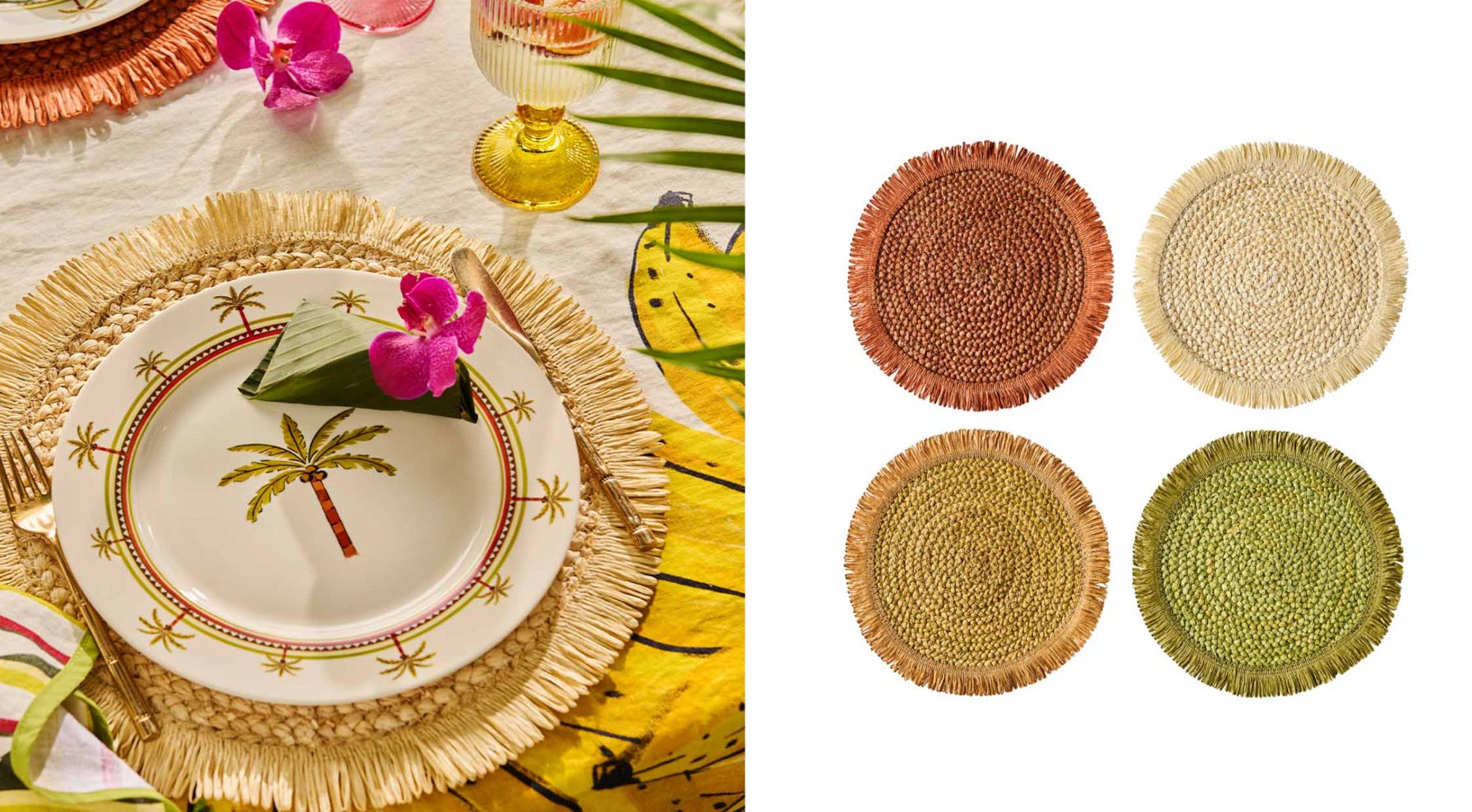
Proof that even the most functional objects deserve a little personality. These are already on my Christmas lunch table. They just don’t know it yet.
05. Bananarama Tablecloth
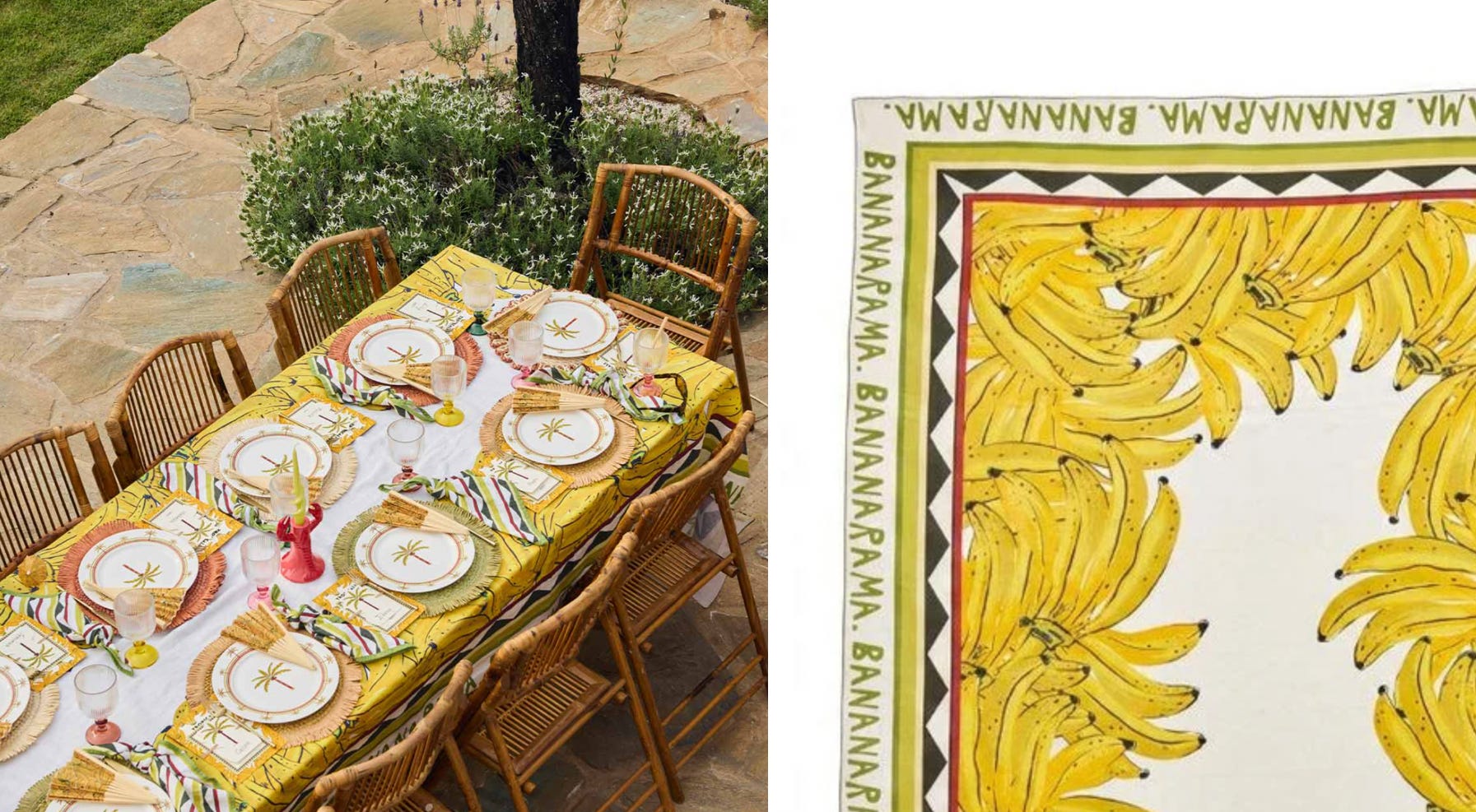
There’s something wonderfully audacious about committing an entire dining table to bananas. And somehow, it’s completely chic.
Shop the Bananarama Tablecloth
